Showing posts with label networks. Show all posts

Thursday, September 24, 2020

Message from the LMOOC SIG


The LMOOC SIG is trying to build a database of good practice to help us understand the profile of LMOOC practitioners: Who are we? What languages are the most popular ones for LMOOCs? How do we organise the course design? What is our main focus? It is part of the ongoing work developed by this SIG, in the endeavour of spreading quality LMOOC practice and research.


If you are or have been involved with LMOOCs (as a course designer, tutor, facilitator, researcher, etc.) we would love to hear from you. Please complete this survey https://docs.google.com/forms/d/e/1FAIpQLScyWT3KZncl6pUB2wZu1FXoUOPBevCKnAJsR9teIiL-Sysnpg/viewform  It will only take you 5 minutes and will help us understand the landscape of LMOOC practice and research.


Elena Martín Monje, LMOOC SIG chair

Kate Borthwick, LMOOC SIG secretary


Thursday, July 23, 2020

Stronger together. EuroCALL signs a Memorandum of Understanding with the Association for Learning Technology (ALT).


Pictured: EUROCALL President (Dr Mirjam Hauck (President) and ALT Chief Executive (Dr Maren Deepwell) 


The Association for Learning Technology (ALT) signed a Memorandum of Understanding (MOU) with the European Association of Computer Assisted Language Learning (EUROCALL) on 4 March 2020.


ALT’s Chief Executive, Dr Maren Deepwell, said “in these difficult times collaboration between scholarly bodies remains key to our Members. We are delighted to formally announce this new relationship which we are looking forward to developing in the coming years. Learning Technology plays an important role in language learning and the work that EUROCALL are doing is closely aligned to our strategic aims and values.”


EUROCALL’s President, Dr Mirjam Hauck, said “We look forward to a fruitful and inspiring collaboration between the two organisations. We feel we are already benefiting from ALT’s expertise in online events which gave us impetus to put together the EuroCALL online Gathering event on 20th/21st August. We are grateful to ALT for sharing their knowledge and experience so openly."


ALT and EUROCALL are both organisations working to enhance the understanding and application of learning technology in education.


EUROCALL brings together international researchers, practitioners and developers both new and experienced who feel passionate about the use of technology for the learning and teaching of languages and cultures.


The Association for Learning Technology (ALT) is the leading professional body for Learning Technology in the UK.  Representing individual and organisational Members from all sectors including Further and Higher Education and industry. ALT provides recognition and accreditation through the CMALT Accreditation Framework  for all with a professional interest in Learning Technology.


There is a lot of scope for collaboration and networking between ALT and EUROCALL with both organisations working to provide a supportive environment for individuals and researchers. 

Some of these activities include academic publishing and community events ( ALT: Research in Learning Technology; ALT: altc and ONLINE SUMMER SUMMIT 2020 Eurocall RECALL: RECALL Journal; EUROCALL review; EUROCALL CONFERENCE PROCEEDINGSEUROCALL ONLINE GATHERING 2020 )


ALT looks forward to collaborating with EUROCALL (subject to agreement of the two bodies) through :


  • influencing and helping shape policy on the government’s learning technology agenda

  • enhancing  relationships on issues on which the two associations have common interests

  • sharing information on technology for learning

  • offering reciprocal organisational or sponsoring membership to one another

  • running joint events on areas of shared interest

  • collaborating on joint projects


Follow on Twitter:

@A_L_T / #altc

@EurocallLang / #eurocall


This announcement is also available on the ALT website. 


Supporting professional development for EuroCALL -ers

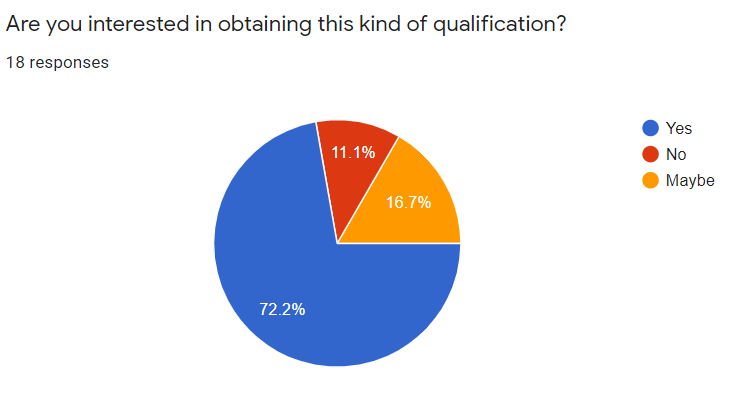
Last summer we surveyed our community to find out what sort of professional recognition was available to those who work with technology in the field of language. We shared details of ALT's Certified membership known as CMALT, a peer assessed e-portfolio approach to professional recognition. The survey showed that this was of interest to our members:


Therefore this is one of the areas we will investigate further with ALT. 


Monday, July 06, 2020

Making your work visible

An essential part of any academic community is the act of sharing our work through publications and personal connections. We are pleased to share good news about how our Gathering can support these activities.  

All those who have had a poster or paper accepted will be able to make it available online for the Gathering. And we are delighted to say that, thanks to the efforts of Research Publishing, we will be publishing an on-line volume of Short Papers later in the year. The papers accepted for EUROCALL this year are of high quality, so we look forward to having the opportunity to hear them in August and see them in print later in the autumn. Make sure you take advantage of this opportunity to share your work!

Thank you to all those who have already subscribed to EUROCALL. Please, if you have not yet done so, take out your EUROCALL membership and attend the Gathering event in August. Instructions on how to do so at the reduced 65 euro rate can be found below:

-Please visit the EUROCALL website to subscribe. You will find the membership join page here: https://www.eurocall-languages.org/site/subscribe_form.php

-Simply select the retired option at 65 euro. Complete the registration form and put an X in any of the boxes that are not applicable to you. The 65 euro button states that it is for ‘retired’ members but for the EUROCALL Gathering event in August we are opening this rate to all those who wish to subscribe. Please note - There is not a separate button to select for the Gathering rate.

-Follow the process through to payment.

Lastly, if you are joining us for the event in August we would like you to complete this form to show your whereabouts in the world. This will give us all a more visual picture of the location of our EUROCALL community.  


Wednesday, August 29, 2018

Future proof CALL: what does it mean?


The theme for this year's EuroCALL conference, as you may have gathered from the publicity was "future-proof CALL". I had not really questioned this choice of theme at all prior to arriving at the conference, my assumption had been that the focus would be on how we could sustain the development and embedding of computer-assisted language learning into the future. I had seen the theme as a call to arms which recognised the vulnerability of this activity - something which resonates with me having seen the effects of the austerity agenda on education in the UK. 

Our keynotes really unpacked this theme and demanded that we look more closely at exactly what it means. The turning point for me came with Claire Kramsch's insights shared through our virtually connecting session . The discussion drew on other English expressions using "proof" - water-proof, fire proof, etc. What did we really mean by future proof? Did we have a shared understanding of what we meant? 

Mark Brown returned to the theme in his keynote (above) and then in the closing panel where Phil Hubbard (3 mins 20) and Mark Brown (11 mins 15) return to it with what may seem to be opposite interpretations: 
-the need to make CALL obsolete and 
-the importance of sustaining a healthy community. 
Having reflected on these views I see them actually being part of one and the same thing. 

Firstly, on obsolescence. I have often told my employers that e-learning is not about the e, it is about learning. The "e" perhaps helps them in their budget/targets, but it is unhelpful to practitioners. It encourages some to believe that "e" is an aspect of teaching or learning that is not for them but only for the technophiles. The CALL label can have the same effect. Our gatherings tend to unite folk with the same tech-leanings, we are dismissed by others as "tech evangelists". This conference identified that we should do more to clarify the pedagogy (not a word I am fond of, so maybe I should say "the approach to learning") which we adopt. 

Secondly on healthy professional communities. This is very close to my heart as I self-identify firstly as a teacher. Unsurprisingly perhaps as I have worked as a language teacher for over 30 years. I am worried about the institutions we are employed in, they have a disregard for the health of our teaching communities. I say that having co-researched the policies of HEIs looking for commitments to sustainable teaching. The publication was based on evidence from Australia but I also looked (where possible) at policies in the UK (most are not publically available if they even exist) and the same issue holds true. There is no clear commitment to supporting healthy teaching communities to underpin sustainable teaching in the future. Healthy communities need interaction, sharing, inclusive, open discussion. The ecological metaphor is totally relevant to the EuroCALL community which has seen innovation and should embrace it. The teaching community needs to be a living, breathing, evolving community of practice. This works best through open educational practice, locking people inside institutional systems only serves to suffocate the community, we need the fresh air of open educational practice to thrive.

During the conference I was able to watch Shona Whyte's presentation of research into teacher understanding of open educational practice and this clarified to me that teachers themselves are not really appreciating why #OEP or indeed what is #OEP. More work to do there on facilitating a more nuanced discussion with practitioners. All the time being aware of the monsters we are warned about in Mark Brown's keynote. 

Friday, August 24, 2018

Visualising the #eurocall2018 twitter network


The thing about having an active twitter network is that your connections have skills which they share in random acts of kindness! This network visualisation was created by Aras Bozkurt and if you take a closer look though this link to visualisation you can see who has been active on the #eurocall2018 tag and get a feel for the connections which have taken place through social media whilst we have been in Finland - I mean #funland.

Take a closer look using the links on the left hand side too: